Grace, Grow & Edify is dedicated to recommending quality resources to benefit homeschooling families. This blog contains and is monetized through sponsored posts and affiliate links. Please see our full disclosure policy for detailed information.
Teaching language arts to boys can be a challenge. My oldest graduated in 2023, and with her, language arts came easily. Fast forward to homeschooling two sixth-grade boys, and the experience is a little different. Of course, every child is unique, and learning styles matter, but I have learned that boys can take a little longer to develop specific language skills. Reading fluency, handwriting, and grammar do not always come easily or naturally for them as they might for girls. That does not mean they are behind. It simply means they often thrive with a slower, mastery-based approach rather than something fast-paced, overly academic, or rigorous.
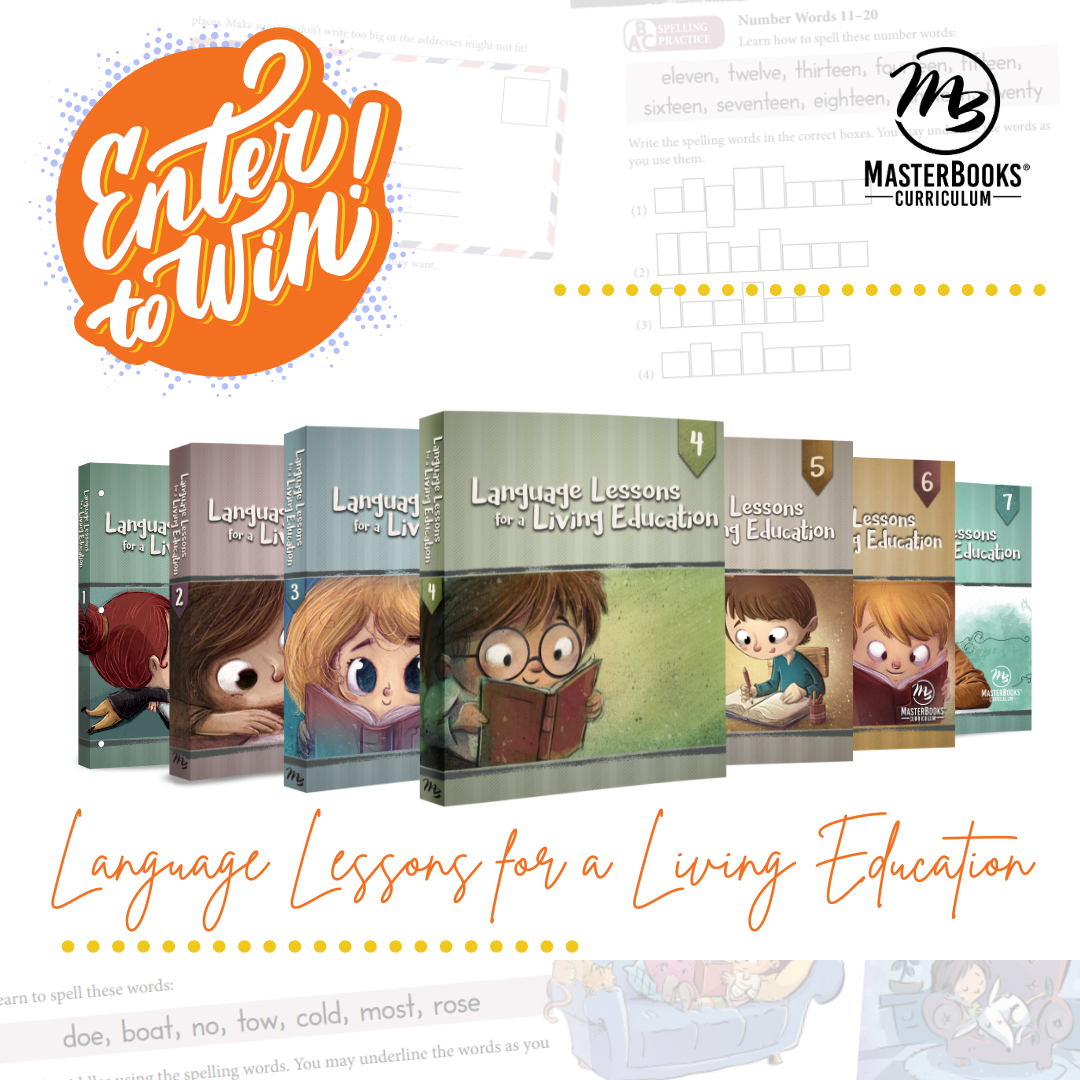
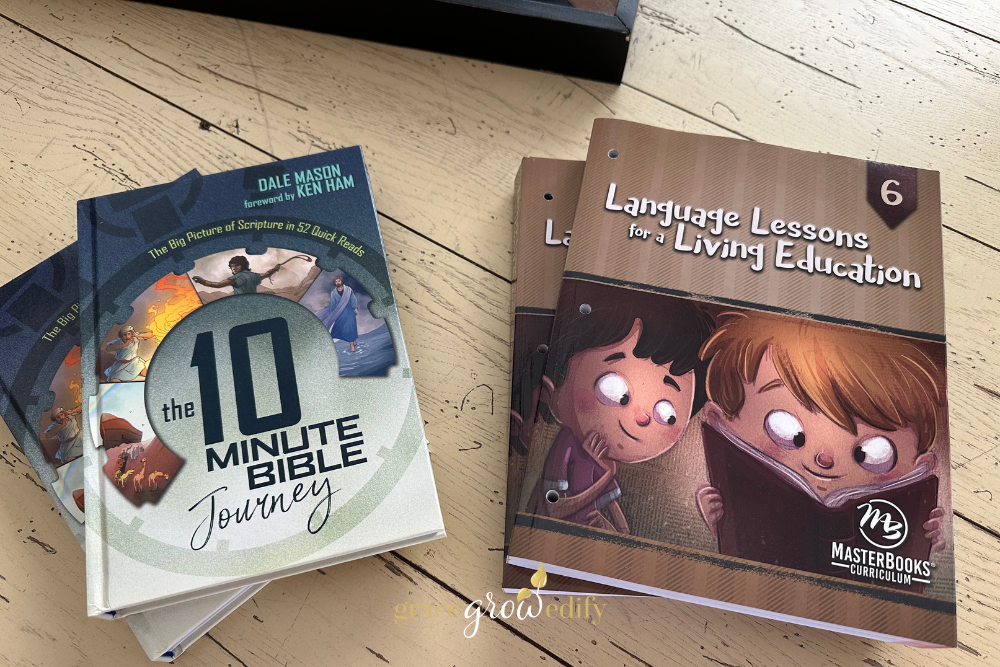
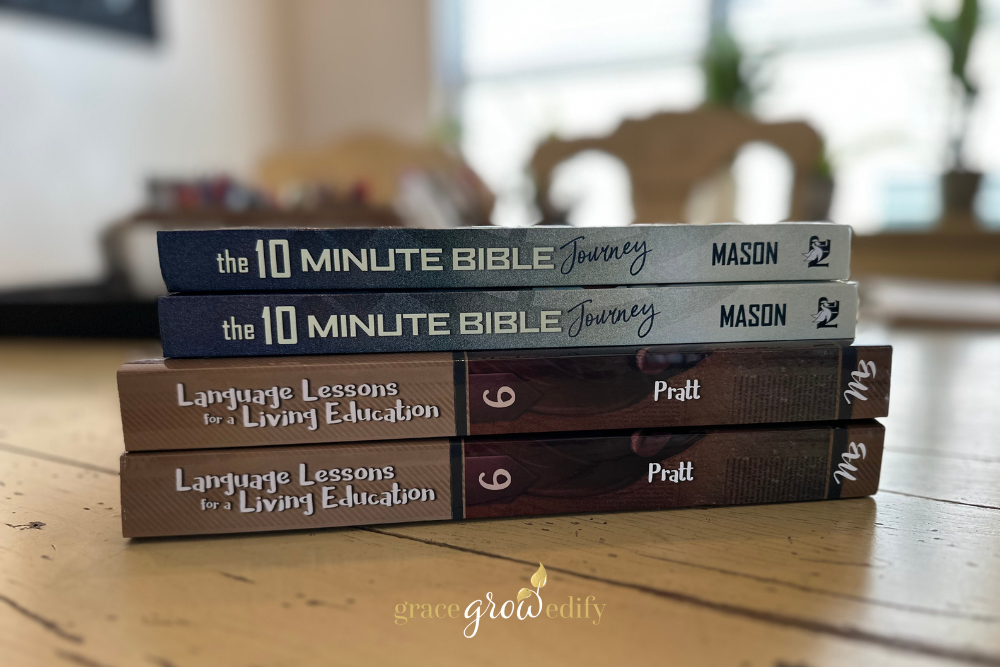
That is why we have returned to Master Books’ Language Lessons for a Living Education Level 6 this year. We used it in fourth and fifth grade, and I was genuinely delighted to have the chance to use it again in sixth grade. For our family, it strikes the perfect balance. The gentle pace, short lessons, and meaningful content keep my boys engaged without overwhelming them.
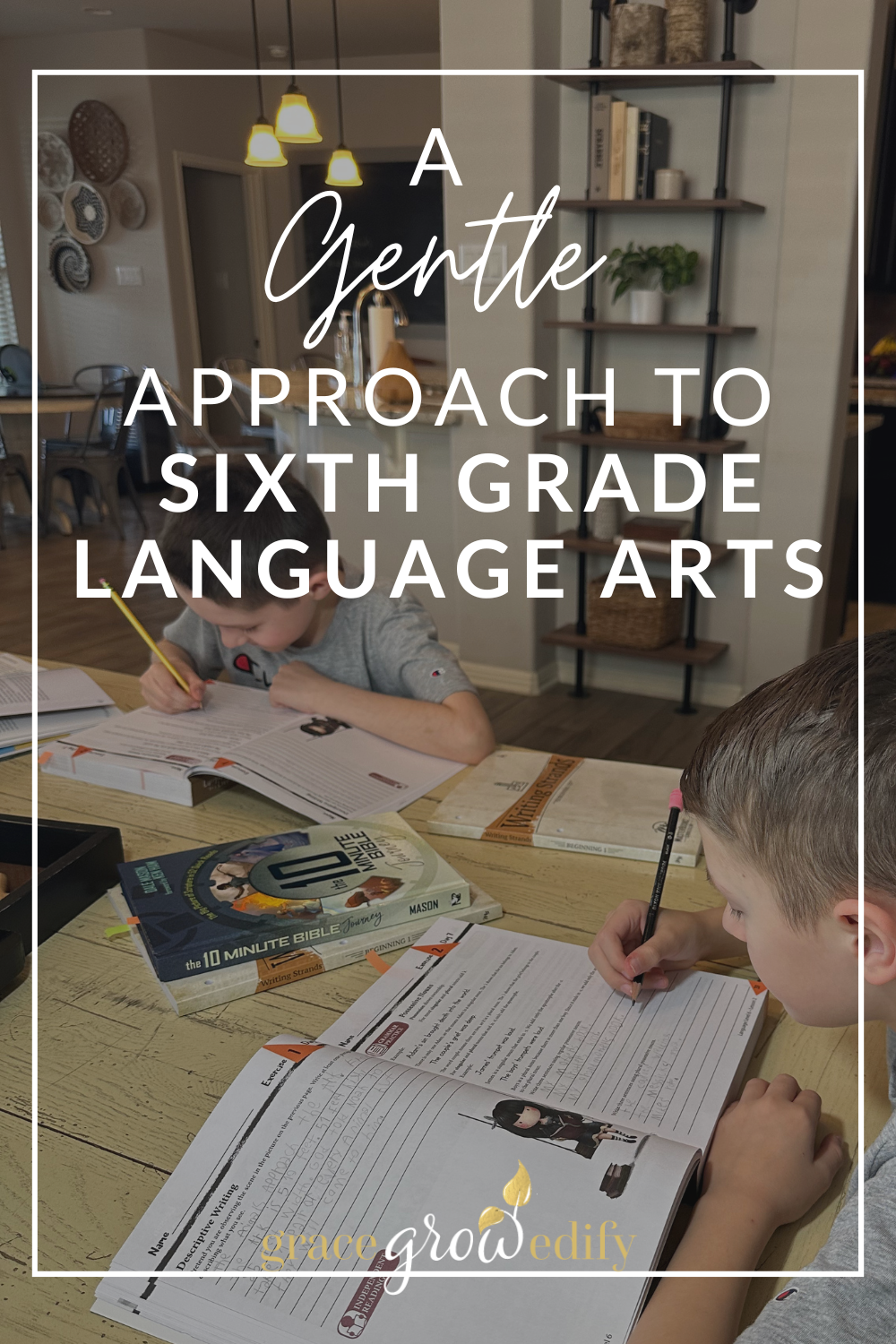
Why a Gentle Approach to Language Arts Works for Boys
It’s no secret that boys often struggle to focus during long lessons, and many find it challenging to articulate their thoughts on paper. The beauty of a gentle approach is that it meets them where they are. Instead of burying them in busywork, it offers small, consistent steps that build skill and confidence over time. With Language Lessons for a Living Education Level 6, my boys move forward steadily and feel good about their progress.
Charlotte Mason and Mastery-Based Learning
The Language Lessons for a Living Education series is influenced by Charlotte Mason’s principles. It uses living books, copywork, narration, and gentle progression. In the Charlotte Mason philosophy, mastery occurs when a child fully understands and retains a concept before progressing to the next one. It is not about racing through a set amount of material to keep pace. Language Lessons for a Living Education Level 6 captures that spirit beautifully. Lessons are concise yet intentional, allowing children to absorb and apply what they learn without feeling rushed.
I want my children to approach schoolwork without stress or dread, especially when it comes to language arts. I hope that they enjoy learning, reading, writing, grammar, and everything that language arts encompasses. (Ok, grammar may be a stretch! Haha, but you get what I mean.)
One of the things I appreciate most about Master Books is their understanding that children thrive when they know what to expect and can settle into steady rhythms. Language Lessons for a Living Education Level 6 follows a simple weekly rhythm that our family has come to enjoy, making lessons feel familiar and manageable while still moving forward each day.
What We Appreciate About Language Lessons for a Living Education Level 6
Homeschooling seasons change, and what works in one year may shift in the next. One curriculum that has consistently worked well for us in multiple seasons is Language Lessons for a Living Education. It blends faith, academics, and a manageable pace in a way that fits our current needs.
- Open-and-Go: Little to no prep time for me as a parent.
- Faith-Focused: Biblical truths and Scripture woven into the lessons.
- Practical Skills: Grammar, writing, vocabulary, and reading comprehension are taught in a way that is relevant and approachable.
- Confidence-Building: Short lessons that keep my boys engaged and prevent burnout. We want quality over quantity.
The Weekly Rhythm of Language Lessons for a Living Education Level 6
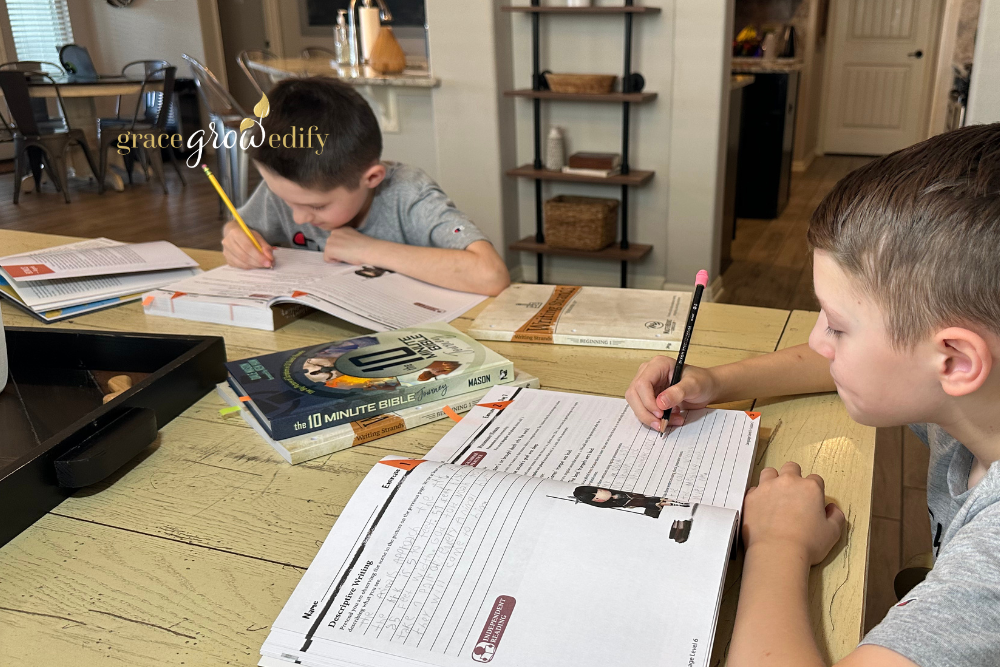
Language Lessons for a Living Education Level 6 has a simple and steady weekly rhythm that makes it easy to homeschool consistently. This kind of structure helps me stay on track and gives my children a sense of predictability, which makes the work feel more approachable and less overwhelming.
In Level 6, students work on communication skills while also deepening their understanding of the Bible. Over the year, they read from The 10 Minute Bible Journey, explore picture studies, enjoy poetry, and build a personal dictionary by completing weekly spelling and vocabulary activities.
Here is how a typical week is set up:
- Day 1: Read a short story or poem, complete a picture study, and look at selected Bible verses.
- Days 2 & 3: Focus on writing topics such as grammar, punctuation, and composition.
- Day 4: Read from The 10 Minute Bible Journey, do Scripture copywork, and practice memorization.
- Day 5: Add to a personal dictionary while working on spelling and vocabulary.
This pattern keeps lessons short yet meaningful, giving students a variety of activities while still building skills step by step.
Extra Ways to Enrich Your Weekly Language Arts Routine
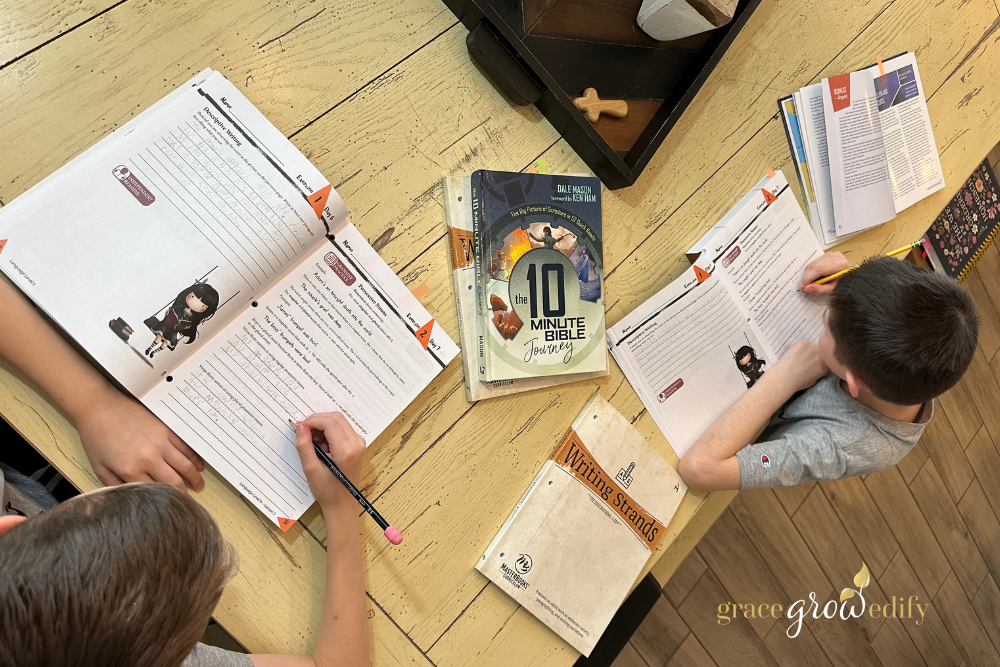
Do you need to add more to your weekly language arts routine? Language Lessons for a Living Education Level 6 features built-in resources that you might overlook if you are not familiar with Master Books’ language arts curriculum. In the back of the book, you will find a book list for additional reading ideas, perfect for assigning daily independent reading. Students are encouraged to create their own dictionary, and the dictionary pages can be found online to make it easy to reinforce vocabulary each week. You can add extra copywork from Bible passages or independent readers, and there is even a book report template ready for you to use. A list of additional writing activities is included, along with the books of the Bible for memory work. You will also find extra activities and games in the back. These features make it simple to add variety and depth to your homeschool language arts without having to search for additional materials.
Strengthening Writing Skills for Sixth Grade Language Arts
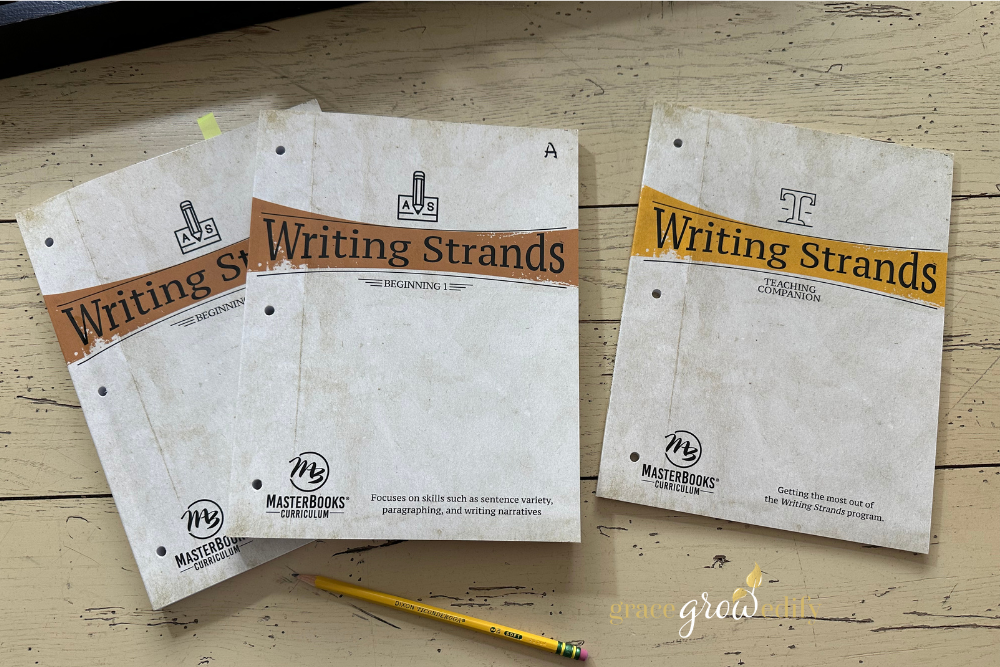
Want to add more emphasis on writing in sixth grade? Consider pairing Writing Strands by Master Books with Language Lessons for a Living Education Level 6. We have added it to our routine this year, and it fits perfectly alongside our daily language arts without feeling overwhelming.
Writing Strands Beginning 1 provides students with extra practice in skills such as building descriptive sentences, organizing ideas in a logical sequence, and writing conversations using proper dialogue. It also incorporates creative writing projects, opportunities to describe objects in detail, and lessons on reading and evaluating literature. The format is interactive and guided, providing students with ample support as they develop their writing skills.
There is support for us teachers, too! If you grab the teaching companion, it has a wealth of information if you need a little guidance when it comes to teaching writing in your homeschool.
I appreciate that Writing Strands rotates between writing and reading assignments, helping students see the connection between being a good reader and becoming a better writer. It also weaves in Biblical examples and character studies, which keeps the learning meaningful. For us, this addition has made our language arts routine feel complete while still keeping it manageable. My boys are reluctant writers, so this has been a great fit so far.
Creating a Space Where Language Arts is Enjoyed and Not Dreaded
I want my children to enjoy language arts, not dread it. My goal is to raise confident readers, thoughtful writers, and young men who see the value in expressing themselves well. A gentle, mastery-based program like Language Lessons for a Living Education Level 6 allows us to move forward at a pace that works for them, while maintaining a positive and productive homeschool atmosphere.
Here are a few simple ways to make language arts more enjoyable:
- Read aloud together often, even as children get older.
- Visit the library regularly to explore new topics and genres.
- Strew interesting books around your home seasonally or by theme.
- Incorporate morning baskets with a mix of literature, poetry, and copywork.
- Use oral narration when writing feels overwhelming.
- Offer a variety of reading materials, including magazines, comics, and nonfiction.
- Connect lessons to real-life experiences, such as cooking, nature walks, or family projects, to enhance learning.
Final Thoughts
If you are a Christian homeschool family seeking a language arts program that prioritizes mastery over constant rigor, incorporates faith into daily lessons, and helps children build confidence without feeling overwhelmed, Language Lessons for a Living Education Level 6 is worth a closer look. It has served our family well for three years, and I am grateful for the way it has helped my boys grow in both skill and confidence.